
No Clock, No Rush
The ball waits behind a gate until you press DROP. Reading the pipes and setting the switches never costs a ball, so take as long as you like.
A switch-and-drop puzzle
Set the switches. Then DROP.
A ball waits behind a gate at the top of the board. Under it, a glass pipe splits at switches and its branches weave over and under each other, down to the critters trapped in bubbles at the bottom. Take your time: tap the switches until the way leads where you want, press DROP, and free every critter before the balls run out.
How it escalates
The first boards are one pipe and one switch. Then the pipe branches twice, and from board 11 some branches are blocked by a cork you can see through the glass. From board 16 come flip switches, which all turn at the end of every drop, so the board looks one way for this ball and the other way for the next. Then two pipes into one critter, boards where the first critter you pick decides whether the rest still fit, and from board 31 a hole at the bottom that sends the ball back out of a pipe at the top. Nothing is hidden and nothing is left to chance: every board can be read before you drop.
Gameplay overview
The ball waits behind a gate until you press DROP. Reading the pipes and setting the switches never costs a ball, so take as long as you like.
The pipes are glass, and all one colour. They pass over and under each other without joining, so the route is there to be traced. The whole game is tracing it right.
The coral switches are yours: each turns only when you tap it. Point every one down the branch you traced, then drop.
The navy flip switches are not. At the end of every drop, wherever the ball went, every one of them turns. The board has two looks, and each critter can be reached on one or both.
Free the critters in any order you like. With flips on the board the order matters: one wrong pick can leave the rest needing a wasted ball. A board gives you one ball more than the fewest it needs.
Some pipes are corked, and the cork shows through the glass. Further on, a hole at the bottom, ringed in violet, sends the ball back out of a bent pipe at the top.
One star for clearing the board, one for clearing it on the first try, one for doing it with the fewest balls it can be done in. Your best is kept, so you can go back for the ones you missed.
Six species to meet as you climb, and a golden critter now and then. Three missions run at a time; finish the set to level up and earn a new ball. Boards pay coins, and there are no lives.
How it works
Pick a critter and follow its pipe back up through the crossings to the gate. Note which flip switches it passes and which way they point now.
Tap each coral switch on the way until it points down the branch you traced.
Press DROP. The ball rides the pipe and frees the critter at its end; then every flip switch on the board turns over.
Pick the next critter on the board as it looks now. Free them all to clear the board; do it in the fewest balls for the third star.
Gameplay screenshots
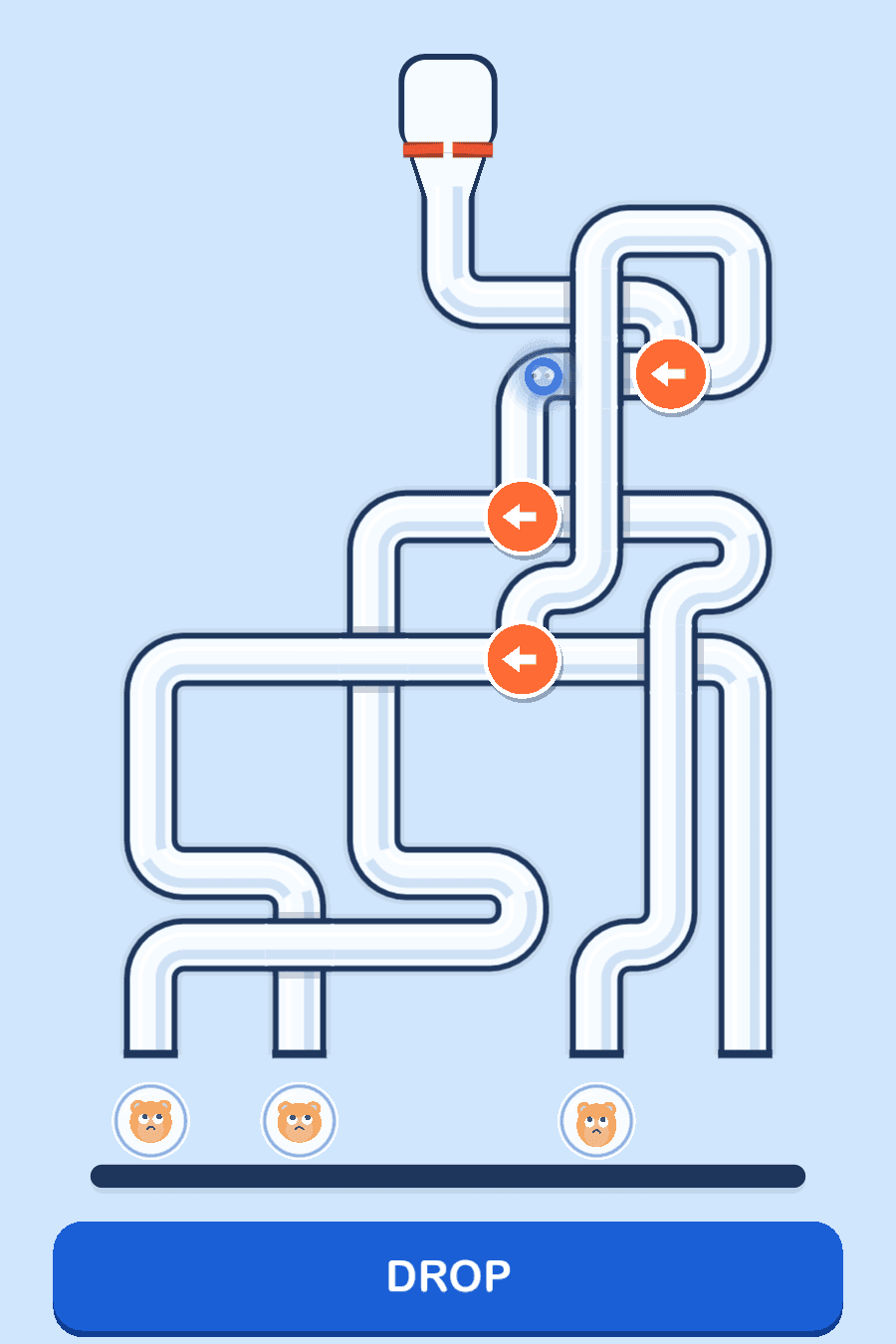
Tap a switch, then DROP.
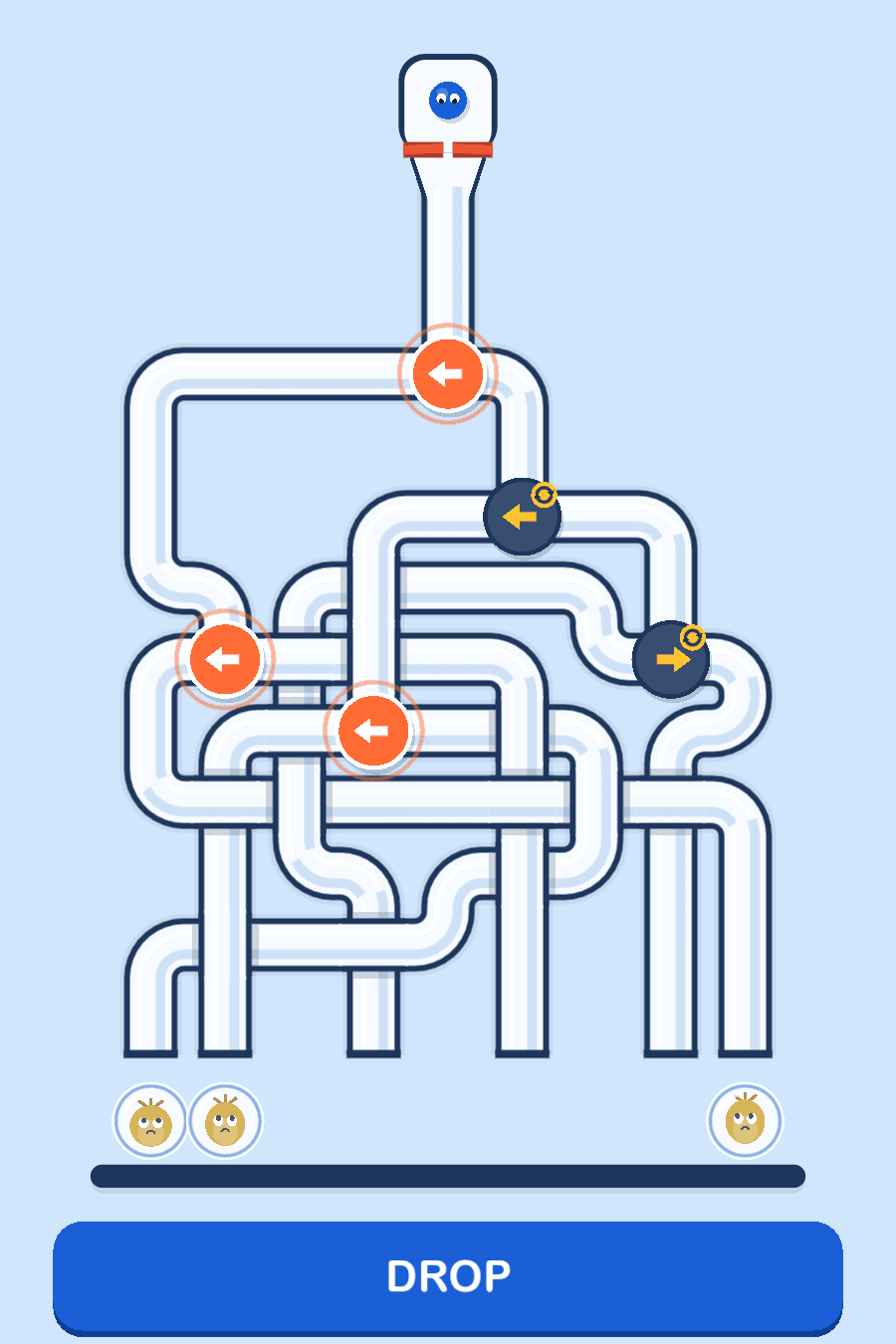
Which critter first? Plan the order.
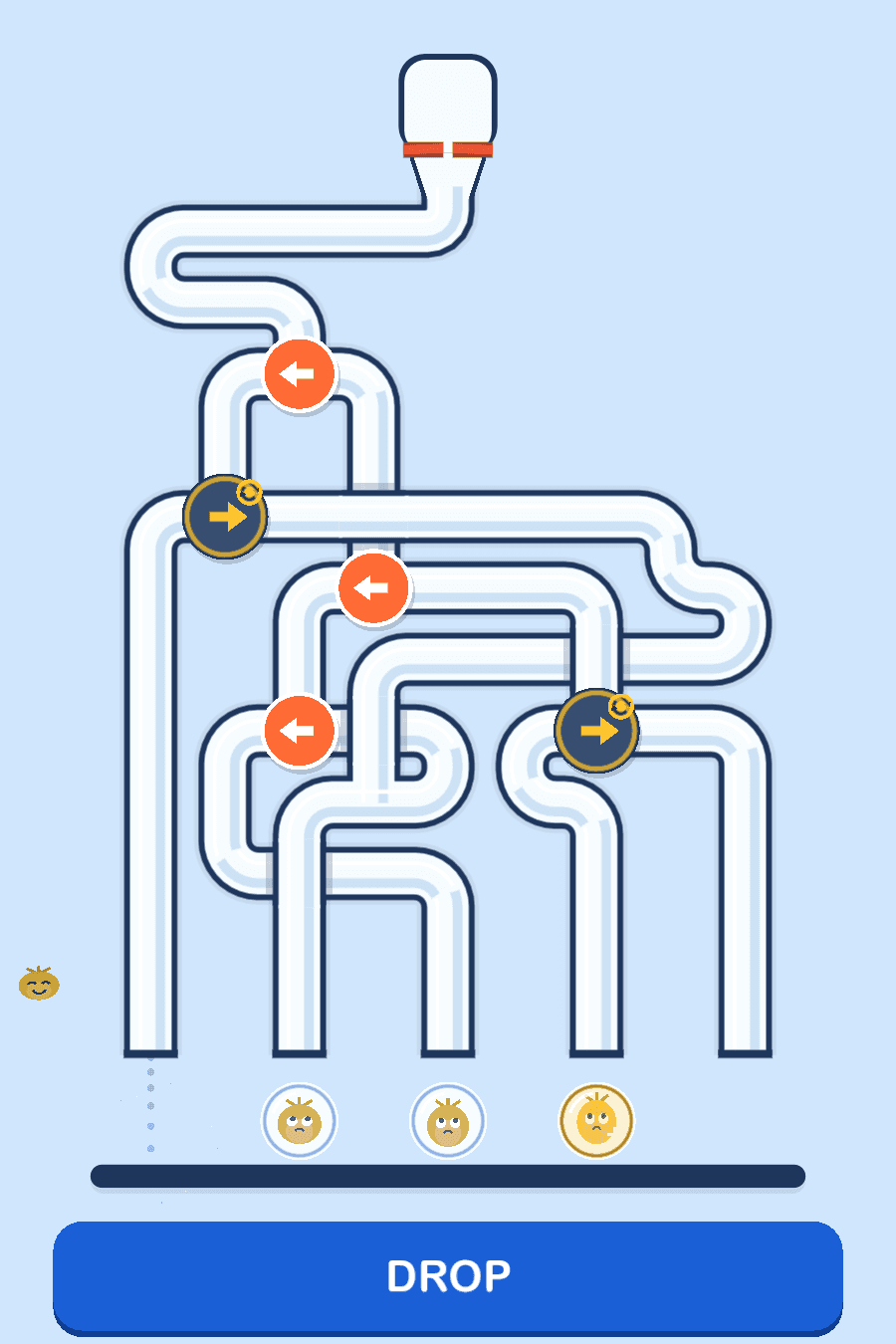
Every drop flips them all.
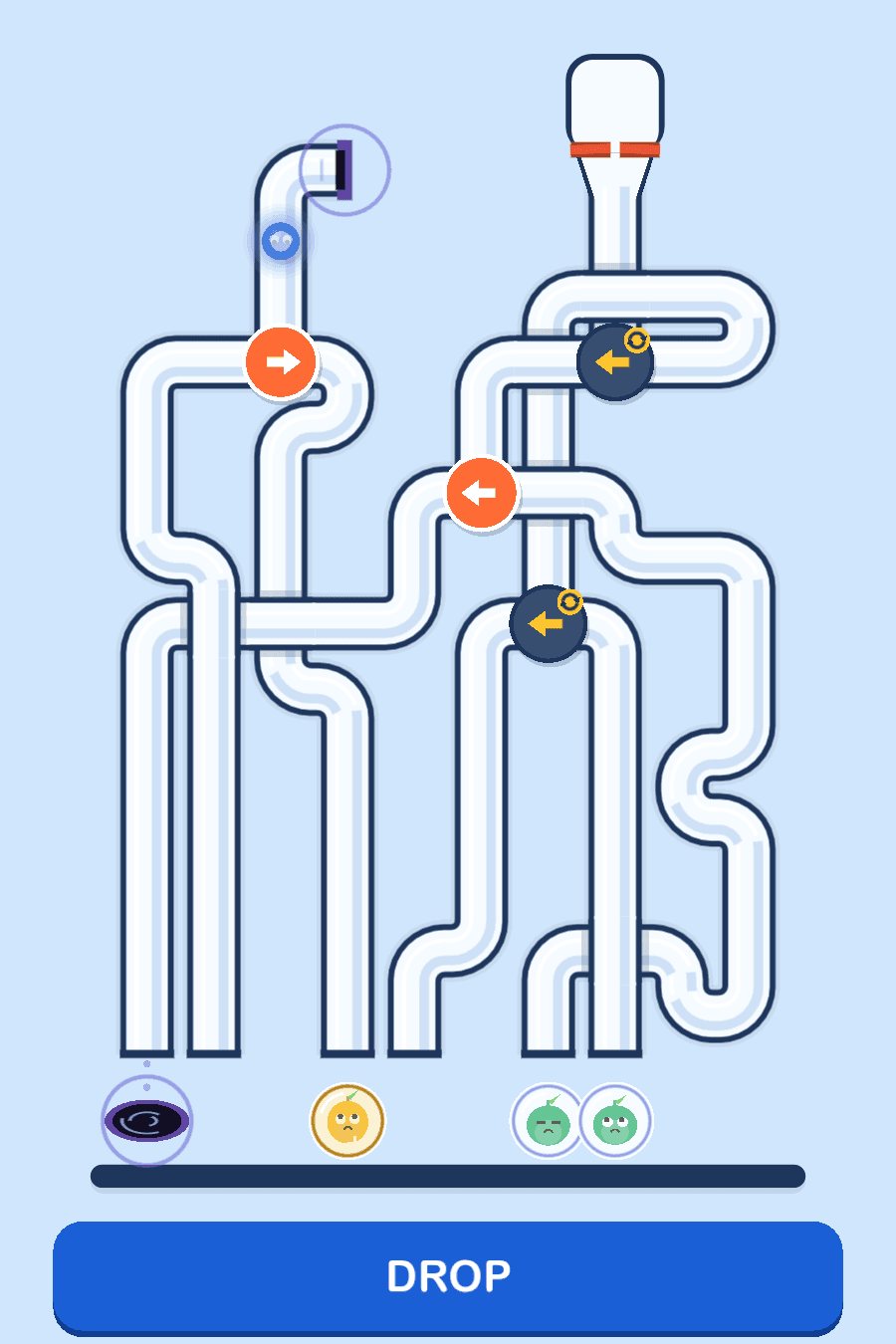
Down the hole, out the bent pipe.
Tap a switch, then DROP.
Which critter first? Plan the order.
Every drop flips them all.
Down the hole, out the bent pipe.
Frequently asked questions
Tap a coral switch to turn it, then press DROP (or tap the ball behind the gate) to let the ball go. Tapping anywhere else does nothing, so reading the board never costs a ball. The first board teaches it with one switch and one critter.
Two reasons. While a ball is riding a pipe, the switches stay as they are until it lands. And the navy flip switches never turn when tapped: all of them turn by themselves at the end of every drop.
On a board with flip switches, yes. Every drop turns them all, so freeing one critter can leave the next one out of reach until the flips come round again, which costs a ball. Each board gives one ball more than the fewest it needs, so there is room for one mistake; the third star is for making none.
Nothing you have earned is lost. There are no lives: you can try the board again as often as you like. You can also keep the same attempt going with one more ball, bought with coins or earned by watching an optional ad.
Every cleared board earns up to three: one for clearing it, one for doing it on the first try, and one for clearing it with the fewest balls it can be done in. The best you have earned on each board is kept.
A board pays coins the first time you clear it, with more for each ball left over and for a golden critter. Coins buy an extra ball when you run out. They are earned by playing; there is nothing to buy with money.
One new board a day, the same for every player, with one try. It sits apart from the main boards and pays no coins.
Dropbound is free, has no in-app purchases, and shows ads. An occasional full-screen ad can appear after a failed board, when you tap TRY AGAIN or HOME: never during a board, and not in your first few attempts. Two ads are optional and only if you choose them: one more ball when you run out, and doubling the coins a board paid. On iPhone the game asks once, at first launch, whether ads may track you; it plays the same whichever you answer.
No. Dropbound plays fully offline; ads only appear when you are connected. The game sends anonymous gameplay statistics when it can, and you can turn that off in Settings under Anonymous usage data.
A puzzle you can read
Every board is solved by looking, not by luck. Set the switches, pick the order, drop the ball. A wrong pick costs a ball, never your progress.